
Sauces & Liquid Packaging

Packaging for fluid products has to coordinate product compatibility, dispensing, sealing and handling—not simply hold the right volume.
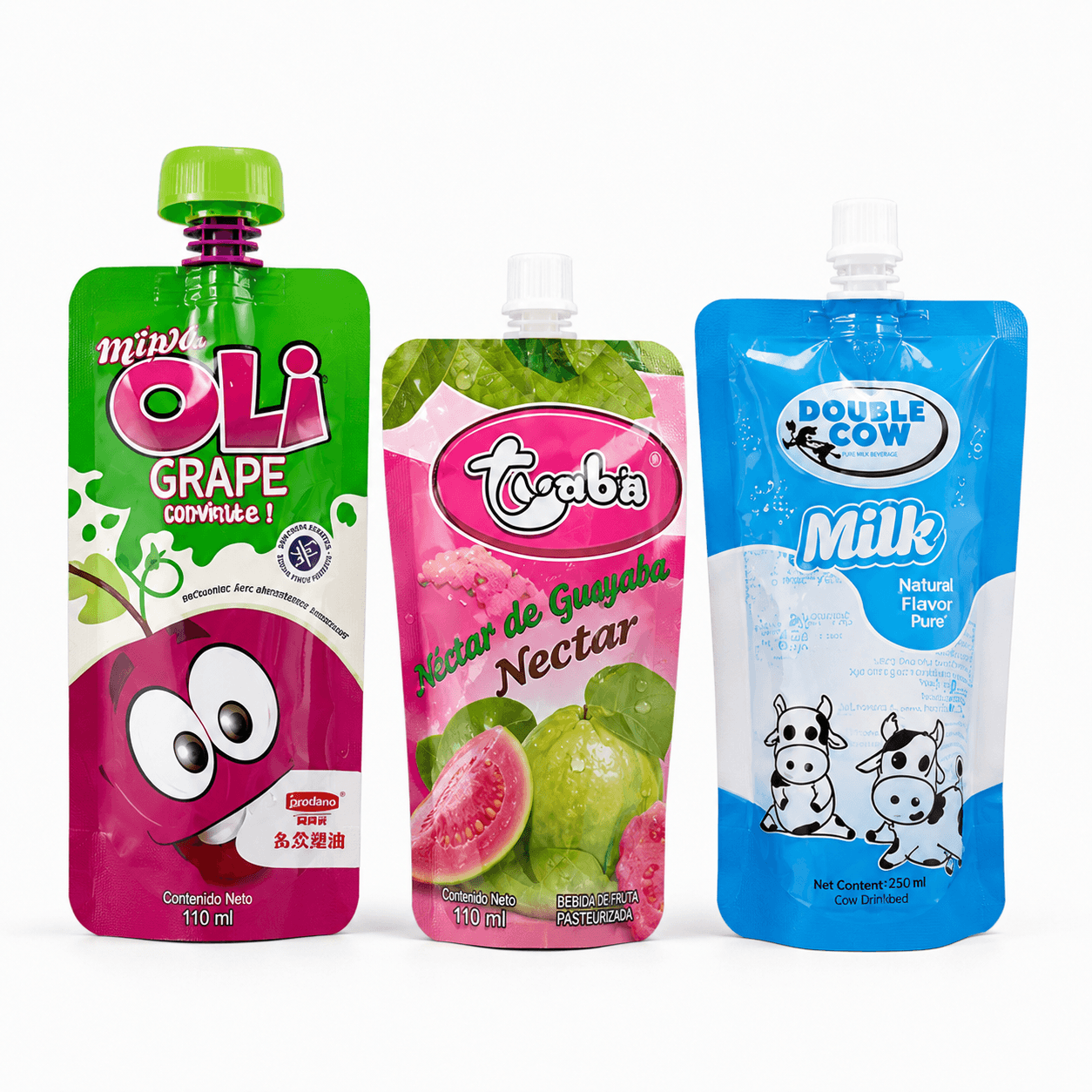
Printed spout pouches for liquid and puree applications

Where liquid projects need closer attention.

These decision points help define the testing and material discussion before a final construction is approved.

01

Leak paths

Fitment seals, cap interfaces and pouch seals all need to work together through filling, shipping and use.

02

Product interaction

Oil, acidity, aroma and other product characteristics can influence the sealant and barrier direction.

03

Dispensing behavior

Viscosity, serving size and user control affect the spout position, opening and cap selection.

Coordinate format, fitment and film structure.

Format

Choose a pouch footprint that supports the intended fill volume and handling.

Spout system

Discuss position, diameter, cap and tamper-evidence requirements.

Sealant layer

Review product contact, filling conditions and required seal behavior.

Barrier layer

Match oxygen, moisture, aroma and light protection to the actual product.

Start with use, then choose the pack.

Different liquid products may call for different dispensing and filling approaches.

Spout PouchesFor controlled dispensing of compatible liquids, purees and refill products.
Stand-Up PouchesFor compatible viscous or portioned products when a spout is not required.

Prepare a liquid packaging brief.

Recommendations should be based on representative product and filling information rather than a generic liquid-pouch specification.

Useful product examples

  • Sauces, dressings and condiments
  • Fruit purees, concentrates and gels
  • Compatible beverage or household refills

Flow behavior

Share viscosity, particles, serving size and the dispensing control expected from the spout.

Product conditions

Confirm oil, acidity, aroma, fill temperature, storage and supported shelf-life requirements.

Filling route

Provide filling direction, equipment, spout insertion or pre-made pouch handling details.

Testing and approval points

  • Review product-contact and sealant compatibility with qualified testing where required.
  • Check filled-pack leakage, drop, compression and cap operation against agreed conditions.
  • Confirm spout, cap, pouch dimensions and torque requirements on the approved specification.

Information for quotation

Product and fillProduct description, viscosity, particles, acidity or oil, fill temperature and method.
Pack and marketTarget volume, size, quantity, destination, storage, opening and tamper-evidence needs.

Liquid packaging questions.

Which pouch format is commonly considered for liquids?Spout pouches are one route because they combine storage and controlled dispensing, but the product, viscosity, fill process and use case must be reviewed.
What details affect leak resistance?Film compatibility, sealant selection, spout fitment, seal geometry, cap torque and production controls all contribute to package integrity.
Can the same structure be used for every sauce?No. Oil content, acidity, temperature, viscosity, shelf-life and filling conditions can change the appropriate material and sealing approach.

Share the liquid, filling method and intended use.

Share your product, target format and quantity. We will help define a practical next step.

Request Samples