
Shelf behavior
Decide whether the pack should stand, hang, lie flat or run through automated equipment.
Pouch geometry affects capacity, shelf stability, opening, printable area and compatibility with the intended packing process.
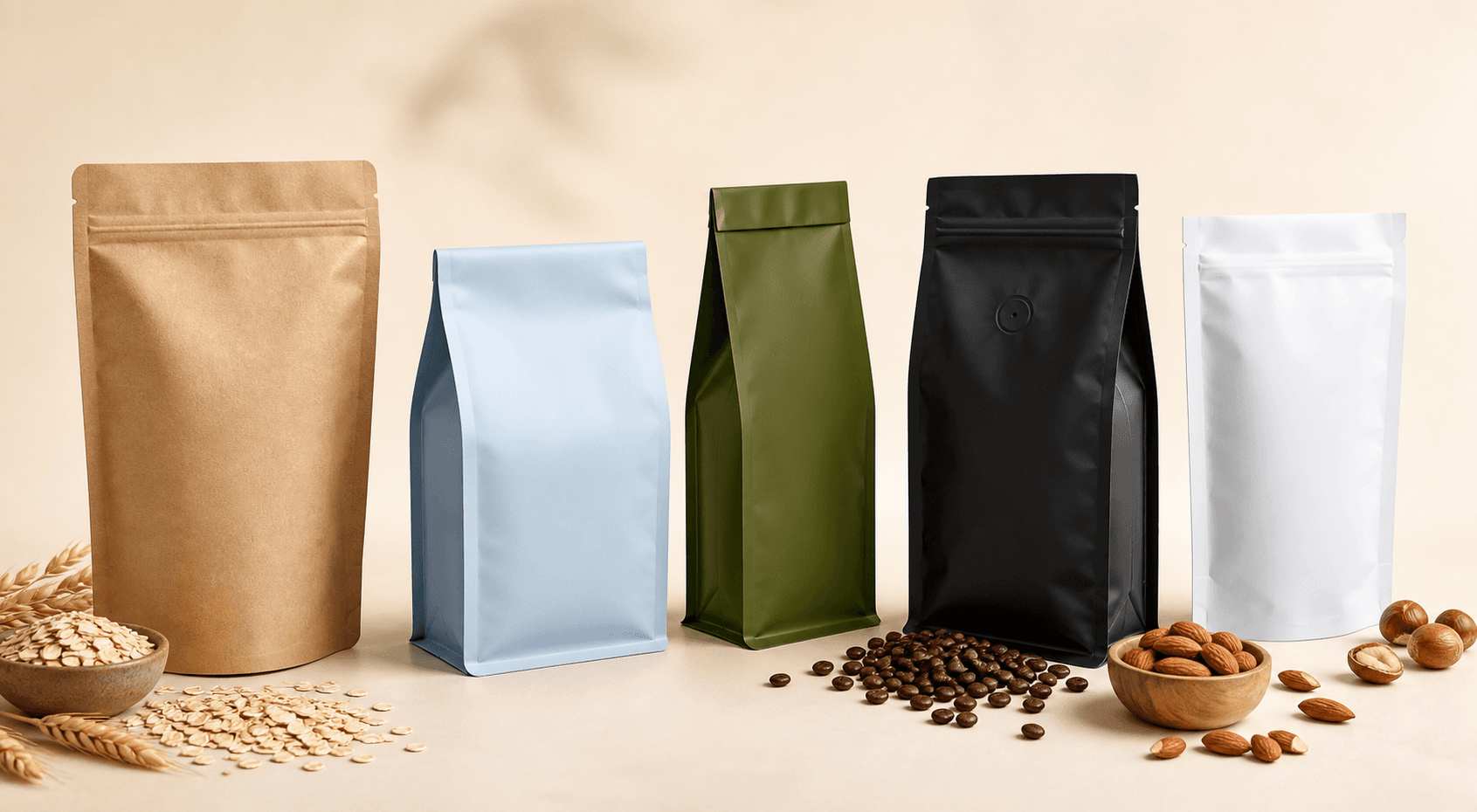
Each choice should be confirmed against product compatibility, filling, distribution and intended use.
Decide whether the pack should stand, hang, lie flat or run through automated equipment.
Coordinate dimensions, gussets and headspace with the real product volume.
Plan opening, dispensing, reclosure and storage after first use.
Share contents, weight, texture and sensitivity.
Identify manual, co-packer or automated equipment requirements.
Review stand-up, flat bottom, side-gusset, three-side-seal, spout and shaped pouch routes.
Coordinate size, film, closures, print and seals.
These inputs make comparisons clearer without turning an early discussion into an unsupported final specification.
Define whether the pack stands, hangs, lies flat, dispenses or recloses.
Use real fill weight, density and headspace instead of selecting dimensions from appearance alone.
Share filling direction, sealing surfaces and machine constraints before confirming geometry.
Share your product, target format and quantity. We will help define a practical next step.