
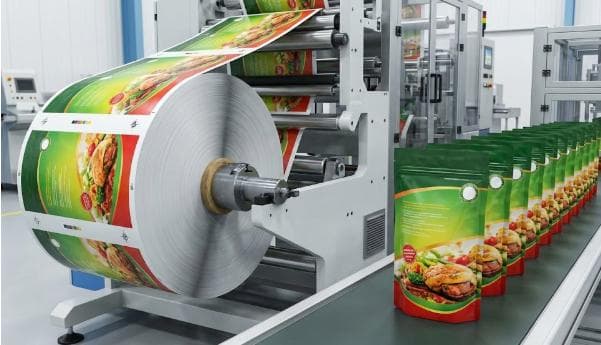
Transforming a roll of film into a finished food packaging bag involves several production steps.
For first-time buyers, understanding this process helps clarify why production takes time and how different techniques influence the final product.
1. Determining Material Structure Based on the Product
Before production begins, the packaging material structure must be determined.
This decision is usually based on factors such as the food type, product weight, shelf-life requirements, and transportation method.
For instance, coffee packaging might use a composite structure like PET/VMPET/PE, whereas packaging for standard snacks might utilize a simpler combination of materials.
Subsequent production steps can only proceed once the material structure is finalized.
2. Film Printing
If the packaging requires brand logos, product images, or text, a printing process is necessary.
High-volume food packaging production typically employs rotogravure printing.
Before printing begins, the design files, colors, and text content must be confirmed.
Modifying the design after printing has started can increase costs, making proofing and final confirmation crucial steps.
3. Multi-layer Lamination
For packaging with a multi-layer structure, the printed film must undergo lamination.
Different materials are bonded together during this process, giving the packaging a combination of properties such as printability, barrier protection, and heat-sealability.
For example, the outer layer handles printing and aesthetics, the functional layer provides barrier protection, and the inner layer enables heat sealing.
After lamination, a curing process is required to ensure a stable bond between the materials.
4. Slitting
Large rolls of material cannot be fed directly into the bag-making machine; they must first be slit to the appropriate width based on the bag type and dimensions.
The width of the slit rolls must meet the specifications for the subsequent production stages.
While this process may seem straightforward, inaccurate width control can compromise the dimensions and structural integrity of the finished bag.
5. Bag Forming
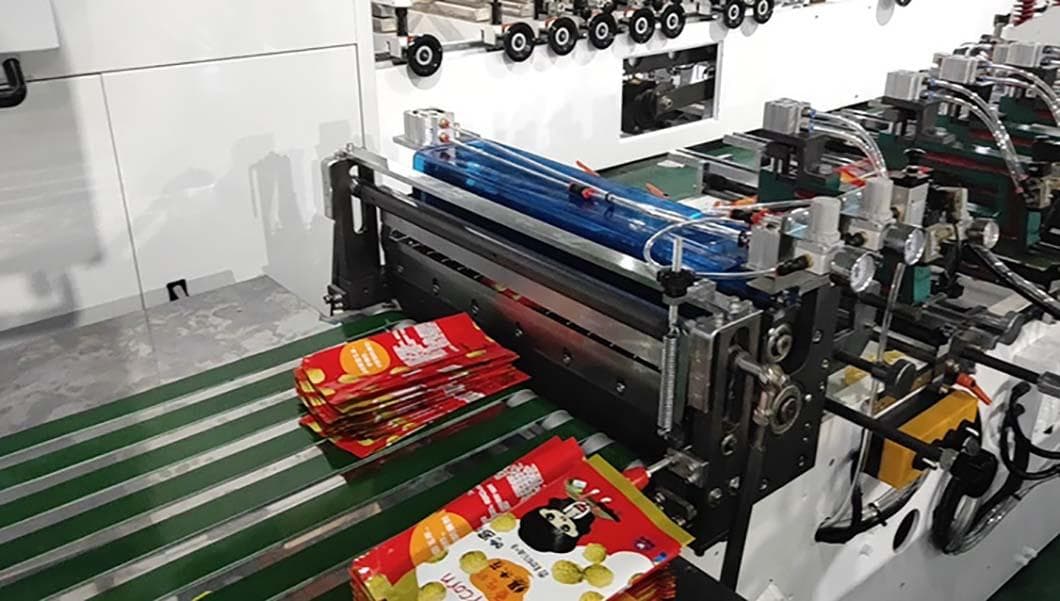
Following the slitting process, the material moves to the bag-making stage.
Various types of packaging bags can be produced according to customer requirements.
Common examples include three-side seal bags, stand-up pouches, side-gusset bags, flat-bottom bags, and spouted pouches. If the product is coffee packaging, a one-way degassing valve may also need to be installed.
For stand-up pouches, particular attention must be paid to the formation of the bottom gusset and the quality of the edge seals.
6. Sealing and Functional Features
Different types of packaging bags may require specific functional designs.
For example, zippers allow consumers to easily open and reseal the package; spouts are suitable for liquids or sauces; and degassing valves are commonly used for coffee packaging.
These features add specific steps to the production process, so they must be confirmed when the packaging structure is being determined.
7. Finished Product Quality Inspection
Once production is complete, the quality of the bags must be inspected.
Common inspection criteria include bag dimensions, visual appearance, print quality, seal integrity, zipper functionality, and other features.
For food packaging, seal strength requires special attention.
Since bags are subjected to pressure during filling and transportation, poor seal quality can lead to air leaks or bag ruptures.
8. Packaging and Shipment
After quality inspection, the finished bags are packed in the required quantities and shipped according to the customer's specifications.
For export orders, factors such as outer carton packaging, transportation methods, and container loading must also be considered.
Thus, the journey of a food packaging bag—from raw film to final delivery—relies on the seamless coordination of multiple stages.
Conclusion
The production process for food packaging bags typically involves material selection, printing, lamination, curing, slitting, bag making, functional processing, quality inspection, and shipment.
Since every stage can impact the final result, choosing a packaging supplier requires looking beyond price to consider materials, production capabilities, and quality control.
FULL PACKING offers flexible food packaging solutions—including various bag styles, material structures, and custom printing options—tailored to the specific food types and packaging needs of products such as coffee, snacks, nuts, and pet food.