
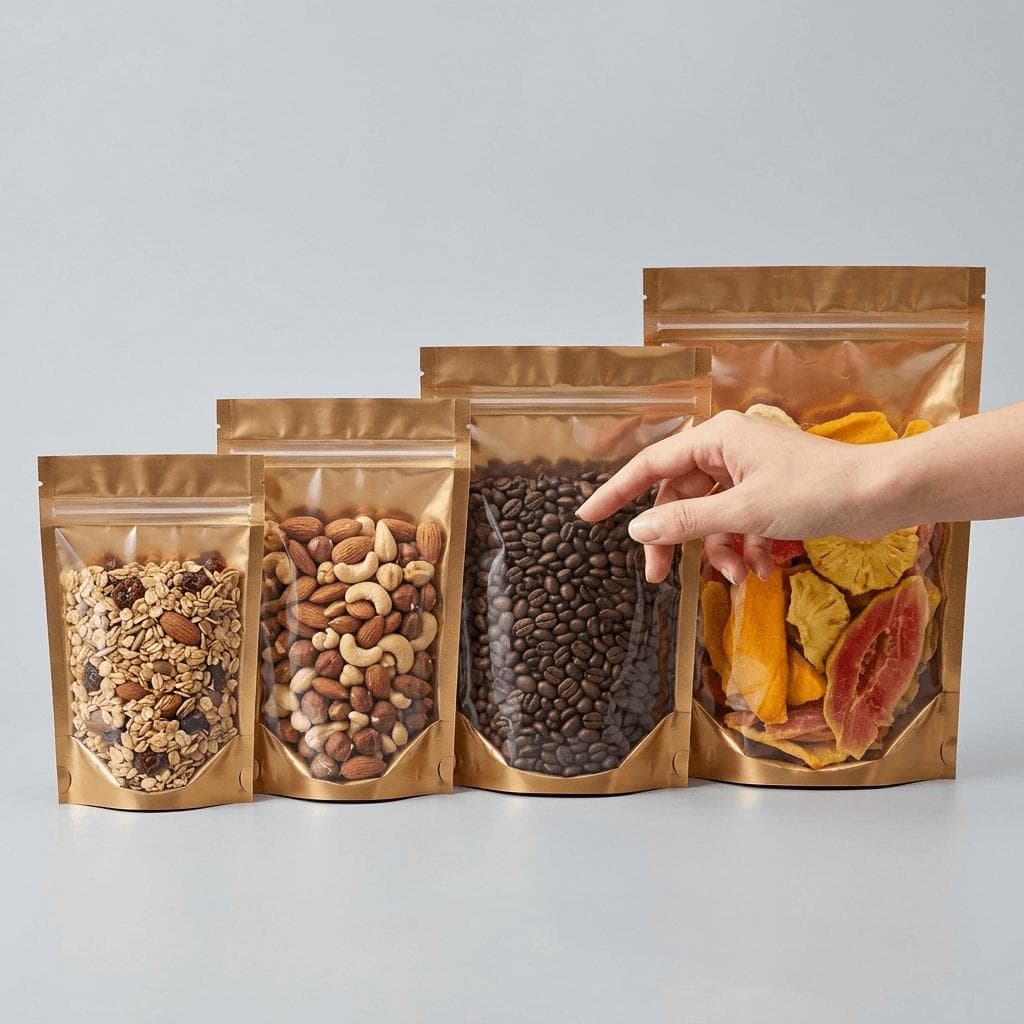
The right thickness for a food packaging bag depends on the material structure, fill weight, pouch size, filling process and distribution conditions. A thicker bag is not automatically the better choice: it still needs suitable barrier properties, reliable seals and compatibility with the product.
For buyers comparing quotations, the first step is to make sure every supplier is describing thickness in the same way. Then assess whether the proposed structure performs well with the actual product.
Understand microns and single-wall thickness
Flexible packaging thickness is often specified in micrometers, written as μm and commonly called microns. One micron equals 0.001 mm. A mil is a different unit: 1 mil equals 25.4 μm; it does not mean one millimeter.
Confirm whether a quoted thickness refers to one wall of the pouch or a measurement through both front and back walls. Also ask whether it describes the total laminate or only one layer. These figures are not interchangeable.
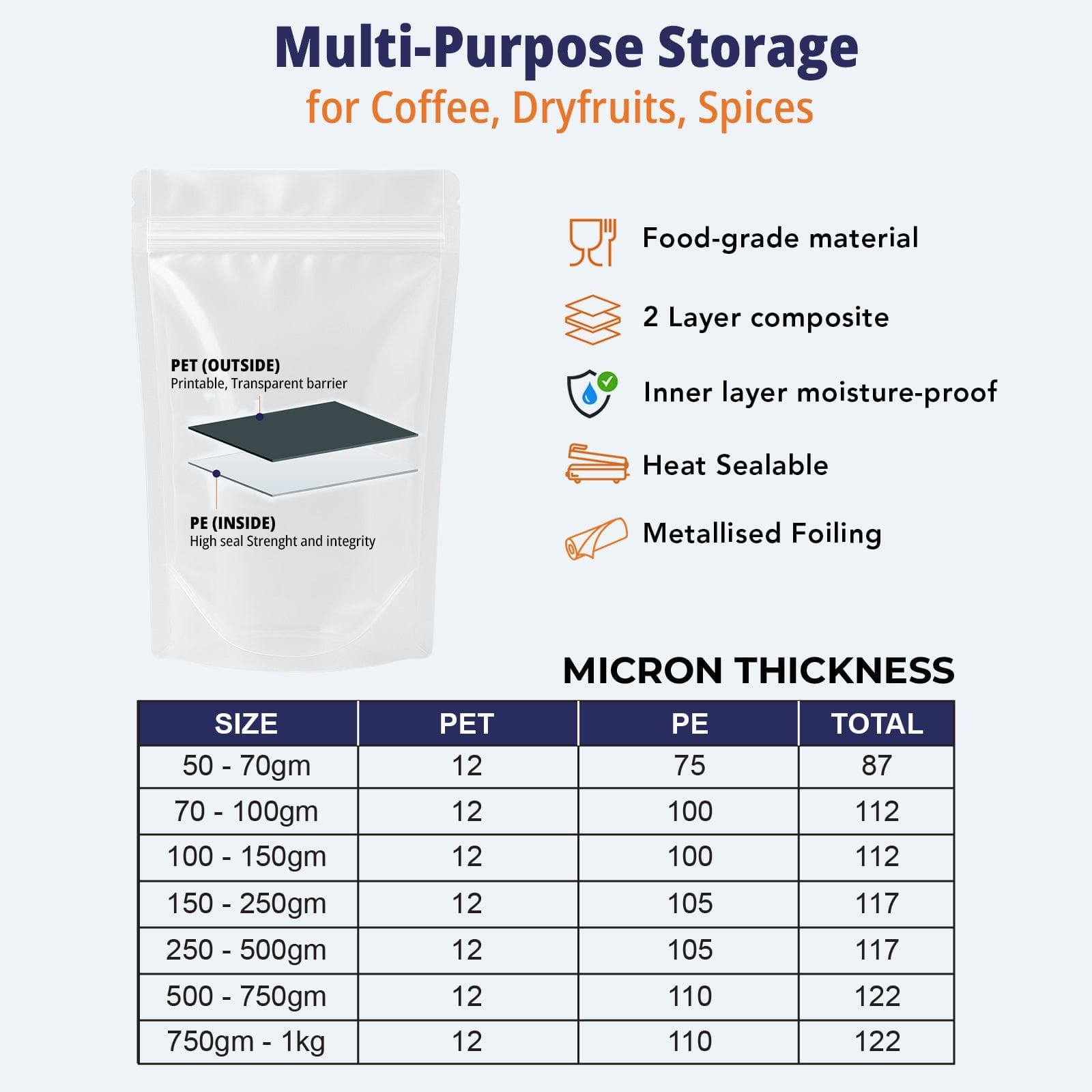
For example, a supplier might describe the film layers as PET 12 μm / PE 80 μm. Their nominal film thicknesses add up to 92 μm, but adhesives and the measurement convention can affect the stated finished-laminate thickness. This example explains the notation; it is not a recommended structure for a particular food.
Consider fill weight, dimensions and product shape
A heavy pack places greater demands on seals and handling strength. Product edges can create puncture risks even in a relatively small bag. Two products with the same fill weight may therefore need different structures.
State both the fill weight and proposed dimensions, including gussets where applicable. Samples should be checked after filling, because an empty bag’s appearance does not show how it will perform under load.
Choose the material structure before judging thickness alone
Thickness may influence strength and transmission, but a thickness figure does not identify the barrier layer or the sealing performance. Adding thickness to an unsuitable structure may not solve oxidation, moisture gain or seal problems.
For snacks, moisture and oxygen protection may matter alongside mechanical strength. For powders, moisture protection and sealing through possible contamination need attention. Frozen products require assessment under realistic cold handling conditions. Define these needs before deciding on a final thickness.
Match the thickness to the pouch format and filling line
Stand-up pouches need a suitable bottom construction and stable presentation after filling. Flat-bottom and side-gusset bags have different folds and sealing areas. Spout pouches also require compatible fitments and welds.
The proposed structure must work with the filling line’s opening, feeding and sealing process. Heat-sealing performance depends on the sealant, temperature, pressure and dwell time. Do not approve a thickness solely because the bag feels firm in your hand.
Include handling and secondary packaging
Review whether the filled pouches will travel in cartons, undergo parcel handling or face demanding stacking and transport conditions. The pouch and its secondary packaging work together to protect the product.
Choose relevant checks for the application, such as filled-pack drop tests, leak checks, seal-strength assessment and puncture evaluation. Long shipping distances alone do not define the required thickness; the actual stresses and storage environment matter.
What to include in a thickness specification
Ask the supplier to identify the full material structure, nominal layer thicknesses where relevant, finished single-wall thickness, measurement basis and agreed tolerance. Confirm pouch dimensions, fill weight, sealing requirements and the acceptance checks for filled samples.
If you have an existing pouch, provide a sample and explain what you want to improve. “Reduce material while maintaining handling performance” is a more useful brief than “make it thinner.” Compare quotations against an agreed specification rather than a thickness number in isolation.
Frequently Asked Questions
What is the best thickness for a 500 g food pouch?
There is no universal value. A 500 g powder, a product with sharp edges and a liquid have different requirements. The material structure, pouch dimensions, filling process and handling conditions must also be considered.
Does a thicker pouch always provide better barrier?
No. The material grade and functional barrier layer are critical. Compare relevant performance data for the proposed construction, not thickness alone.
Can I reduce thickness to lower packaging cost?
Possibly, if the revised structure still meets the agreed protection, sealing and handling requirements. Assess filled samples and filling-line performance before approving a change.
Request a Thickness Recommendation
Send FULL PACKING your product type, fill weight, preferred bag format, approximate dimensions and transport conditions. If available, include a current sample or specification so we can discuss practical material and thickness options.