
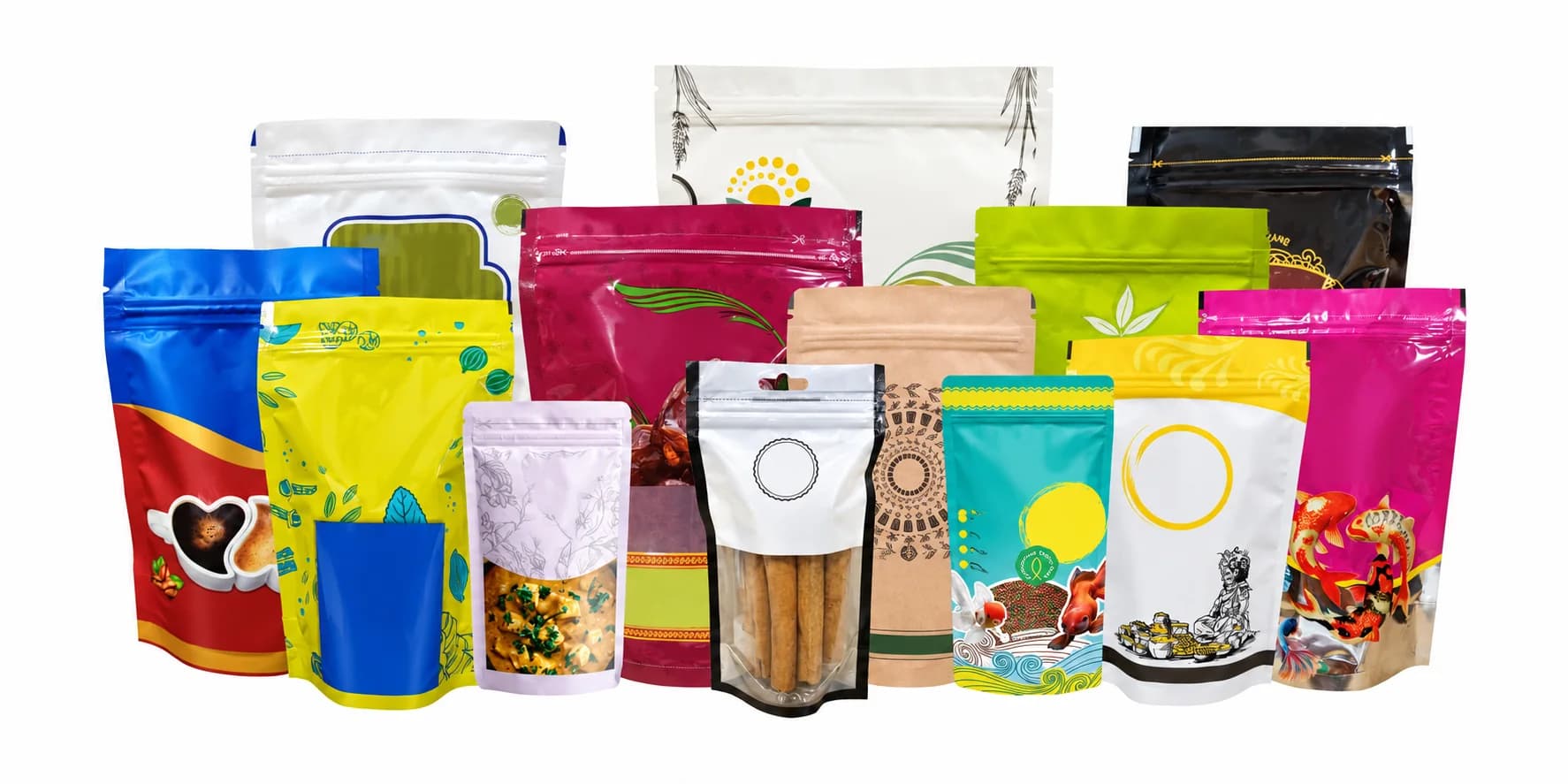
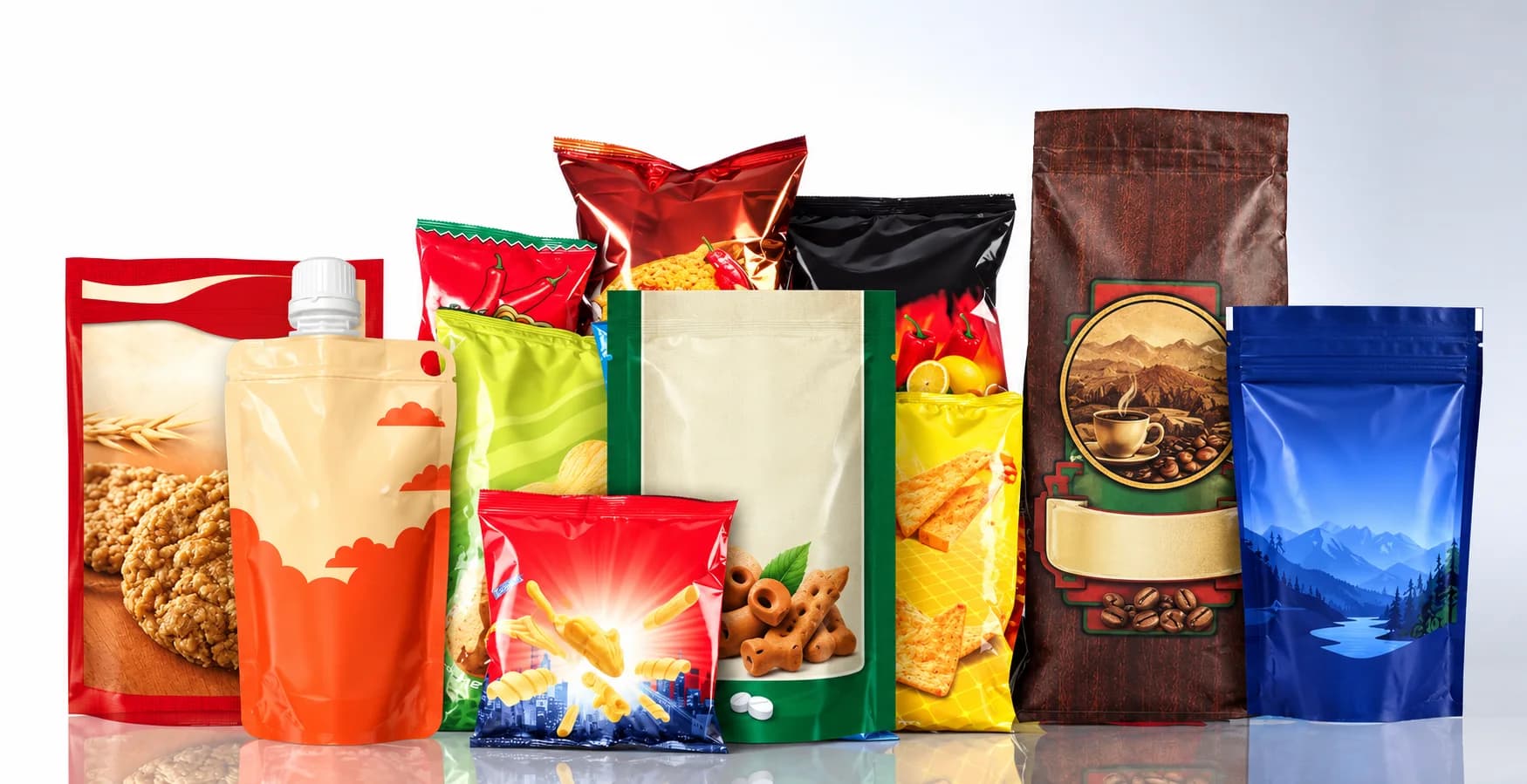
Food packaging bags help limit moisture and oxygen transfer, reduce light exposure and contain the product through handling and transport. Their performance depends on the complete package, including the film, seals and closures. They also work with cartons, pallets and the required storage conditions; a bag alone cannot prevent every type of product damage.
1. Limiting Moisture Transfer
Moisture-sensitive foods such as crisp snacks can lose texture when they absorb water vapor. Other foods may lose moisture instead, changing their texture or weight. Packaging should be selected for the relevant direction of moisture transfer and the expected environment.
The water vapor barrier slows this exchange. Its effectiveness depends on the film structure, temperature, humidity and package integrity, so high humidity on the distribution route should be considered during selection.
Seals and closures also matter. A channel leak or damaged seal can undermine a high-barrier film. Evaluate the complete sealed package rather than relying only on a film specification.
2. Minimizing the impact of oxygen
Oxygen can contribute to oxidation in nuts, coffee and other sensitive foods, affecting flavor and aroma.
An oxygen barrier limits additional oxygen entry but does not remove oxygen already present in the headspace or product. Where appropriate, nitrogen flushing or other packing methods may be considered and validated separately. Barrier packaging alone does not establish the product’s shelf life.
3. Minimizing the impact of light
Some foods are light-sensitive; prolonged exposure to light can alter their color, flavor, or overall quality.
Opaque or suitable metallized and foil-containing structures can reduce light exposure. Metallized PET and aluminum foil are different materials and should not be treated as equivalent. Clear windows expose part of the product to light and may change barrier performance, so assess the complete windowed structure.
4. Preventing damage during transport
Packaging bags are subject to compression, friction, stretching, drops, and punctures during transit.
If the material lacks sufficient strength, the bag is prone to rupturing.
Select a structure and seal design appropriate to fill weight and potential puncture points. Carton strength, packing arrangement, pallet stability and handling also affect damage risk. Run practical trials with filled bags and the planned shipping configuration.
5. Maintaining a secure seal
A reliable seal helps maintain the intended barrier and prevents product leakage. Seal contamination, wrinkles or damage during handling can create a failure path.
Control sealing temperature, pressure and dwell time within a validated operating window. Check performance after filling and, where relevant, after freezing, hot filling or other processing.
For liquid products, include the spout and cap in leak testing. Pressure changes, drops and handling can stress the package; use tests that represent the intended route rather than assuming a good visual seal is sufficient.
6. Adapting to diverse storage environments
Storage temperature affects both the food and the package. Frozen applications require suitable low-temperature toughness; hot filling and retort processing require specifically compatible materials and closures. Barrier bags do not replace refrigeration or a validated preservation process for products that need them.
7. Functional designs offer added convenience
Packaging features can also be customized based on specific product characteristics.
A coffee degassing valve can release gas from roasted coffee while limiting outside air entry. A zipper enables repeated opening and closing, and a spout can aid dispensing. Each feature introduces design and attachment requirements that must be checked.
These features improve usability, but they do not automatically increase shelf life. After opening, storage instructions and how the consumer recloses the pack influence product quality.
Validate the Package for the Actual Distribution Route
Before shipment, check filled samples using the planned carton and packing arrangement. Assess leakage, seal damage, abrasion and product condition after representative handling and storage. For chilled or frozen products, include the required temperature conditions in the evaluation.
Keep the bag specification, shipping configuration and test conditions together. If problems occur, inspect whether the cause is film damage, seal failure, closure failure, poor secondary packaging or unsuitable storage conditions before changing the bag.
Food shelf-life claims should be based on the actual product, processing, package and storage conditions. Stronger barrier performance can help, but it is not a guarantee of food safety or a particular shelf life.
Send Full Packing your fill weight, storage conditions, destination and any current leakage or damage problems to discuss packaging options and sample testing.