
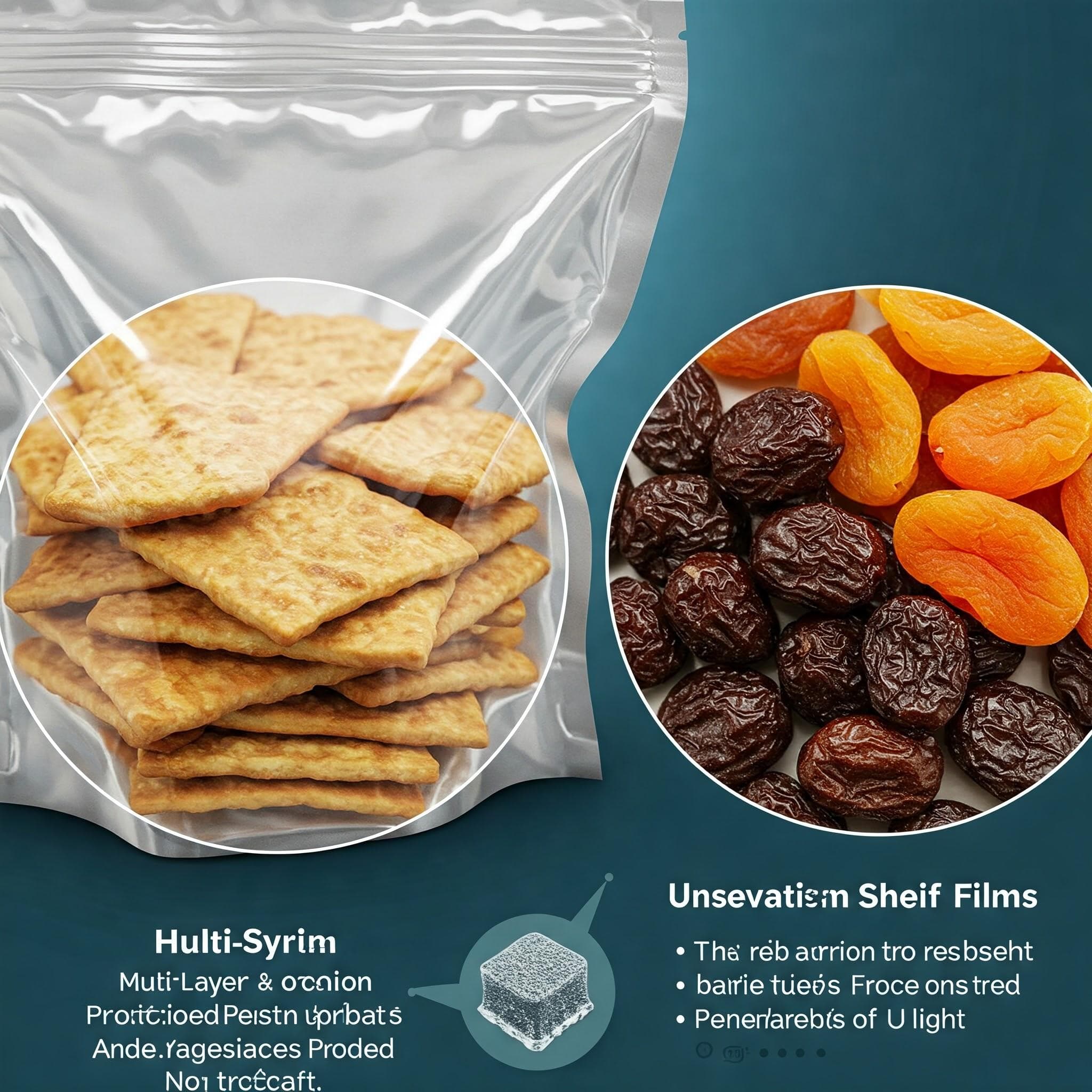
For many food products, moisture is a critical factor affecting quality.
Potato chips lose their crispness when exposed to moisture; cookies can become soft; powdered foods may clump; and nuts can be adversely affected by changes in the storage environment.
Consequently, moisture resistance is a key consideration for many food companies when designing packaging.
Why do food products require moisture protection?
Different foods have varying levels of sensitivity to moisture.
For products like potato chips, puffed snacks, and cookies, maintaining a low moisture content helps preserve their original texture.
Powdered foods may clump upon absorbing atmospheric moisture, which can impair their usability.
Prolonged exposure to high-humidity environments can also compromise the overall quality of certain food products.
Therefore, the role of packaging goes beyond merely containing the food; it must also minimize the ingress of external moisture.
What is moisture resistance?
Simply put, moisture resistance refers to a package's ability to limit the passage of water vapor from the outside to the inside.
This performance depends on factors such as the packaging material, material thickness, composite structure, and the quality of the seal.
For instance, while standard plastic films offer some degree of moisture resistance, utilizing an optimized composite structure allows the packaging to better meet the specific needs of different food products.
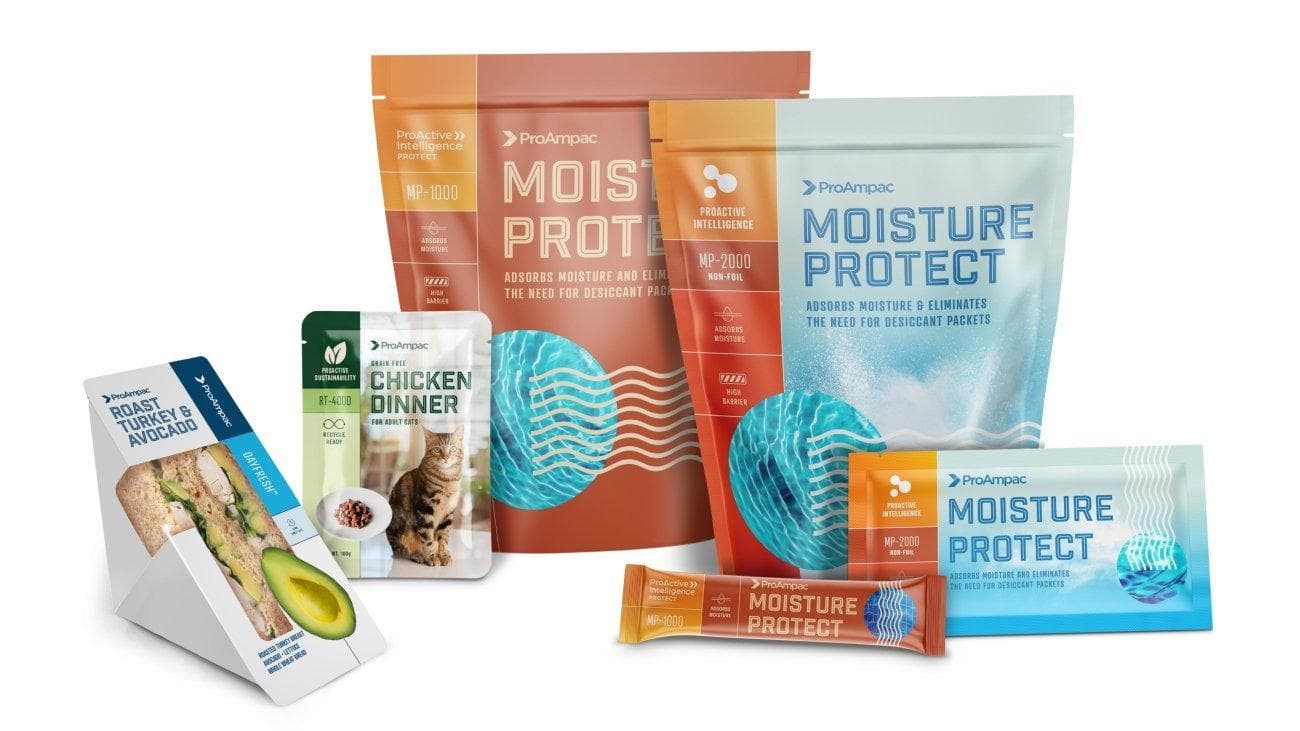
Thus, material selection should be based on the food product's specific moisture sensitivity.
Which materials are suitable for moisture-proof packaging?
Common food packaging materials—such as PET, BOPP, PE, VMPET, and aluminum foil—can all be utilized in various packaging structures.
PE, for example, is frequently used as the inner layer of composite packaging, where it also provides heat-sealing capabilities.
If superior overall barrier performance is required, multi-layer structures incorporating materials like VMPET or aluminum foil can be employed.
The specific structure chosen depends on the characteristics of the food product and the intended storage conditions.
Why is the seal so important?
Many clients focus exclusively on materials when selecting packaging, often overlooking the seal.
In reality, even if a package is made from a material with excellent moisture-resistant properties, a weak seal can allow air and moisture to penetrate the bag. Therefore, the heat-sealing temperature, pressure, and duration must be matched to the specific packaging materials.
Seal strength must also be verified during the production process.
Different food products require different moisture-proofing strategies.
Moisture protection is a critical concern for potato chips and puffed snacks, as their texture is closely linked to moisture content.
Biscuits and candies often require effective moisture-proof properties as well.
For powdered foods, factors such as the product's hygroscopicity (tendency to absorb moisture) and how it is used after opening must be considered.
Consequently, there is no single moisture-proof packaging solution that suits every type of food.
Does thicker packaging always provide better moisture protection?
Not necessarily.
Packaging thickness is just one factor influencing overall performance.
The material's inherent barrier properties, its composite structure, and the quality of the seal are equally important.
Simply increasing thickness without selecting the appropriate material structure may not yield the desired results.
Therefore, the best approach is to select materials and thicknesses based on the specific needs of the food product.
Conclusion
The primary function of moisture-proof packaging is to minimize the risk of external moisture affecting the food, thereby preserving its texture and quality.
When selecting food packaging, one should consider a range of factors, including the food type, storage environment, transportation conditions, shelf life, and cost.
FULL PACKING offers tailored moisture-proof packaging structures designed to meet the specific requirements of products such as potato chips, biscuits, nuts, candies, and powdered foods.