
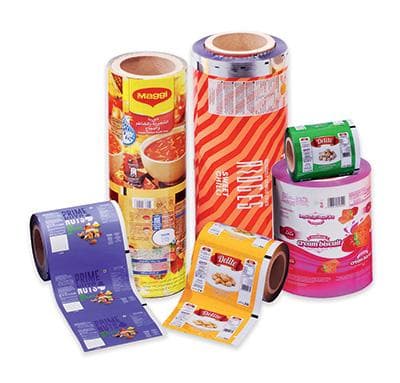
In the food packaging industry, many packaging bags are not made from a single material but are instead created by laminating two or more layers of film together. Multi-layer composite structures are frequently used for coffee bags, nut bags, potato chip bags, pet food bags, and various snack packages.
Why do food packages require multiple materials? What roles do the different materials play? Understanding these aspects helps food companies select the most appropriate packaging solutions.
What is multi-layer composite packaging film?
Simply put, multi-layer composite packaging film is formed by combining films with different properties through a lamination process to create a single, integrated packaging material.
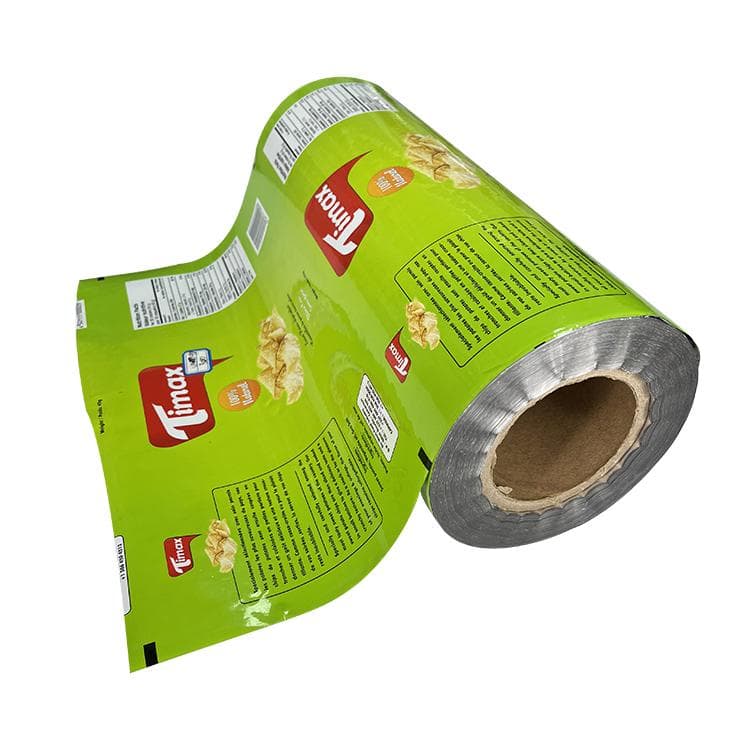
Each type of film offers unique advantages. For instance, PET boasts excellent printability and mechanical strength; PE offers superior heat-sealing capabilities; BOPP provides good transparency and gloss; and VMPET or aluminum foil deliver enhanced barrier properties and light-blocking capabilities.
By combining different materials, a single packaging bag can meet multiple requirements simultaneously.
Why can't a single material be used?
Food packaging must meet a wide range of requirements.
First and foremost, the packaging must securely contain the food and possess sufficient structural strength. Additionally, factors such as moisture resistance, oxygen barrier properties, light shielding, heat-sealing capability, printability, and durability during transport must be considered.
It is often difficult for a single material to satisfy all these requirements at once.
For example, while PE offers excellent heat-sealing properties, a product requiring high-quality printing and superior barrier performance might necessitate the addition of other materials.
Therefore, multi-layer composite structures allow manufacturers to leverage the specific strengths of different materials.
What are some common composite materials?
Common materials used in food packaging include PET, BOPP, PE, VMPET, aluminum foil, and nylon.
For instance, PET/PE is a common structure where PET serves as the outer layer and PE acts as the inner heat-sealing layer.
For products requiring enhanced barrier performance, a PET/VMPET/PE structure might be considered.
If a product demands extremely high barrier performance, a composite structure incorporating aluminum foil could be used.
Of course, packaging requirements vary depending on the food product; there is no "one-size-fits-all" structure.
Which food products are suitable for multi-layer composite packaging?
Multi-layer composite packaging is suitable for a wide range of food products.
Coffee packaging, for instance, must address issues regarding oxygen, moisture, light, and gas release (degassing); nuts require protection against oxygen and oil oxidation; potato chips and puffed snacks prioritize moisture resistance; and pet food packaging needs to balance barrier properties with structural strength.
Therefore, the packaging structure should be designed based on the specific characteristics of the food product.
Is a composite structure with more layers always better?
Not necessarily.
Many people assume that more layers automatically equate to better performance. In reality, the number of layers in a structure should be determined by actual requirements.
If the food product does not require high barrier performance, using an overly complex material structure may simply increase packaging costs.
An ideal packaging solution strikes a balance between product protection, performance, and cost.
What factors should be considered when choosing composite packaging?
Before selecting packaging materials, it is helpful to consider the product weight, food type, shelf life, storage conditions, transport distance, and bag style.
For export products, additional factors such as long-distance ocean shipping, warehouse temperatures, and potential compression during transit must also be taken into account.
Providing this information to a packaging supplier makes it much easier to determine the most suitable material structure.
Conclusion
The advantage of multi-layer composite packaging lies in its ability to combine the properties of different materials, offering comprehensive protection for food products.
However, simply adding more materials or increasing thickness is not always the best approach. A truly effective packaging structure should be determined based on the specific characteristics of the food and the actual conditions of use.
FULL PACKING offers tailored multi-layer composite packaging solutions designed to meet the specific requirements of products such as coffee, nuts, snacks, potato chips, and pet food.