
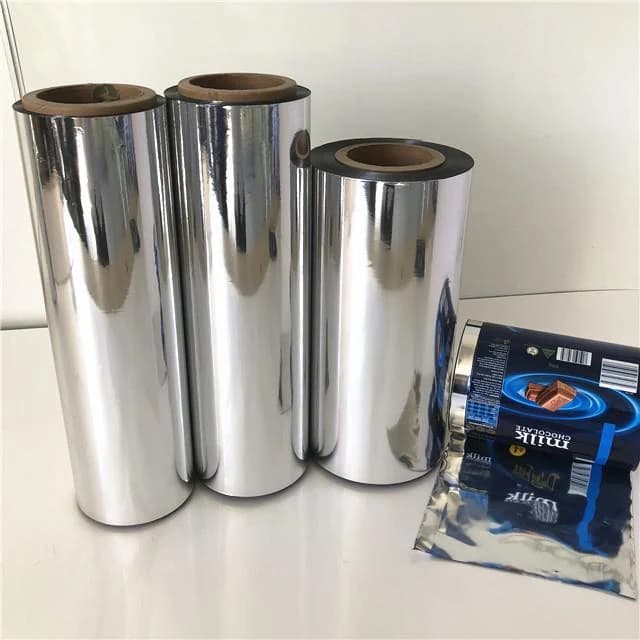
VMPET is vacuum-metallized PET film: polyester film with a very thin aluminum layer deposited onto its surface. In a suitable laminate, it can improve oxygen and moisture barrier performance and reduce light transmission compared with uncoated PET.
It is used as a functional layer in packaging for snacks, coffee, nuts, powders and other products. The selected film grade and complete bag structure determine whether it meets a particular food’s needs.
This guide explains its role, how it differs from aluminum foil, and which specifications to check before ordering a custom bag.
What is VMPET
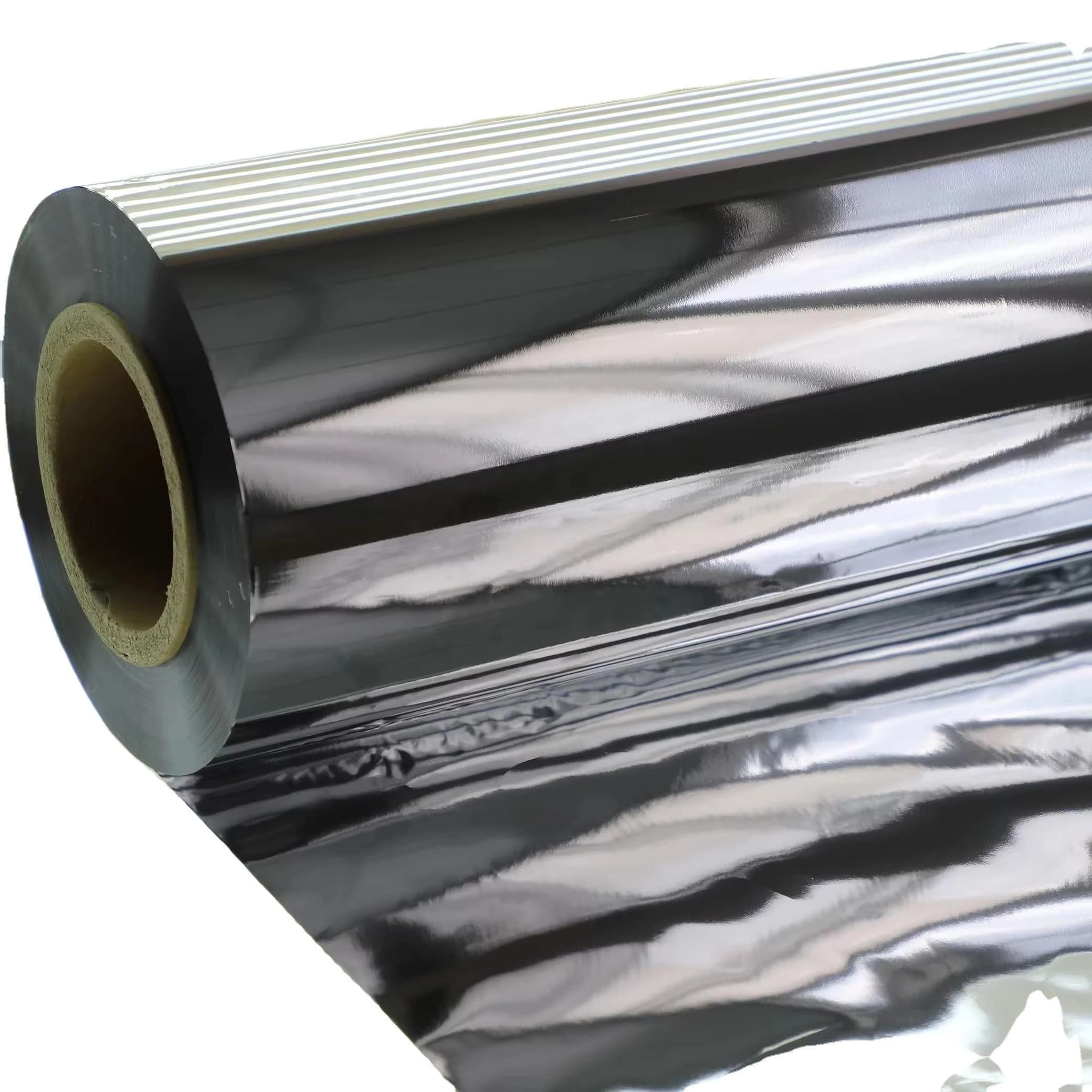
VMPET generally refers to vacuum-metallized polyester film—specifically, a PET film with a very thin layer of aluminum applied via a vacuum metallization process.
The PET substrate provides support for the deposited metal layer. Barrier performance varies with metallization quality, film grade and the condition of the layer after converting.
VMPET usually has a silver appearance, but a silver bag is not proof that it contains VMPET. Aluminum foil and metallized polypropylene can look similar; confirm the layer specification with the supplier.
What is the function of VMPET
VMPET can provide useful oxygen and water-vapor barriers in a relatively thin laminate. It is an option when a product needs more protection than a basic clear-film structure can provide.
During storage, food products can be affected by factors such as oxygen, moisture, and light.
A properly specified VMPET laminate can help reduce exposure to oxygen, moisture and light. It cannot guarantee shelf life on its own: the food, residual oxygen, seals, storage conditions and packing process also matter.
Products such as coffee, nuts, potato chips, and various snack foods often utilize VMPET composite packaging tailored to their specific needs.
Is VMPET moisture-proof
VMPET can reduce water-vapor transmission, but “moisture-proof” is too absolute for a finished package. Request WVTR data at stated test conditions and assess the complete laminate.
Coating defects, flexing, lamination quality and sealing can affect package protection. Thickness alone is not a reliable measure of the finished bag’s barrier performance.
Specify the required protection first, then ask the supplier to propose a structure and supporting data. A named VMPET layer does not prove that every bag offers the same barrier level.
Is VMPET the same as aluminum foil
Not exactly.
VMPET consists of a PET film with a very thin aluminum coating, whereas aluminum foil is a standalone aluminum material.
Both can be used as barrier layers, but their performance and handling characteristics differ. VMPET uses deposited metal on a plastic substrate; aluminum foil is a separate metal sheet laminated with other materials.
Foil may be considered for demanding barrier targets. However, the performance of either finished laminate must be confirmed, including seals and resistance to damage during use.
Which foods are suitable for VMPET packaging
VMPET laminates can be considered for foods affected by oxygen, moisture or light. Suitability depends on the food and the required storage period.
Examples include coffee, nuts, potato chips, puffed snacks, confectionery, pet food, and various powdered food products.
However, different foods have varying requirements regarding barrier properties.
For example, fatty snacks and nuts may need protection from oxidation as well as moisture. Powdered foods may need strong moisture protection, while coffee requirements also depend on roasting and packing conditions.
Therefore, VMPET is just one option among many material structures; the final solution must be determined based on the specific characteristics of the food product.
How is VMPET typically combined with other materials
VMPET is rarely used alone as a standalone package; instead, it is usually laminated with other films.
PET/VMPET/PE is one illustrative structure, usually written from the outside of the bag to the food-contact side.
In this example, PET provides a printable outer surface, VMPET supplies the metallized barrier layer, and PE provides an inner sealing surface. Adhesives and printing systems also form part of the packaging specification.
The individual layers must work together during lamination, bag making and filling. Standard VMPET should not be assumed to be a standalone heat-sealable pouch material.
Choosing a suitable structure
VMPET is a metallized PET film used within flexible packaging laminates, rather than a complete packaging specification.
Its role is to add barrier and light protection, while other layers provide printing, sealing and additional mechanical properties.
Before approval, review OTR and WVTR data, light protection, seal performance and samples on the intended packing line. Confirm food-contact suitability for the finished structure and validate shelf life with the actual product.
Frequently asked questions
Does VMPET guarantee a longer shelf life
No. Its barrier properties can support shelf-life goals, but the actual food, packing process, seal integrity and storage conditions must be validated together.
Can a VMPET bag have a transparent window
A window needs a separately specified transparent area or construction. It can change light and barrier protection, so evaluate the window together with the complete bag.
Need a metallized food packaging bag? Share your product, target shelf life, storage conditions and filling method with FULL PACKING so we can discuss a suitable format and laminate specification.